
Your pipeline isn't broken. Your conversion process probably isn't broken either. What's broken is the assumption that a prospect visits your website once, likes what they see, and calls you.
That's not how B2B buying works anymore. According to Hallam's 2026 B2B Marketing Benchmark Report, 73% of B2B marketers now cite longer sales cycles as their number one growth barrier. Not budget. Not competition. Not lead volume.
And that number has been climbing for five years straight.
The numbers first
The average B2B sales cycle now spans 11.5 months from initial engagement to close. For mid-market deals, expect six to nine months as the baseline. Enterprise deals routinely stretch past a year.
- Sales cycles have lengthened 38% since 2021 (Ebsta, 2024).
- Win rates dropped 27% over the same period.
- 86% of all B2B purchases stall at some point during the journey (Forrester, 2024).
Here is the stat that reframes everything: 69% of the purchase process happens before a buyer speaks to your sales team. By the time someone contacts you, they've already formed opinions. Your website isn't the beginning of their journey; it’s where they validate a decision they’re already forming.
Why deals are taking longer: The buying committee problem
Ten years ago, the average B2B purchase involved 5.4 decision-makers. Today, Gartner puts it at 8–10 stakeholders, and Forrester reports up to 13 stakeholders crossing multiple departments.
A deal that once required a conversation with one person now requires alignment across IT, finance, procurement, legal, and operations. Every one of those people has:
- Different questions.
- Different proof requirements.
- Different definitions of risk.
Deals don't fail because of product fit; they stall because of internal friction—people who weren't in the initial conversation raising concerns that nobody mapped.
What most websites are built for (and why it's the wrong brief)
Most B2B websites are built for the Decision Maker. But it ignores the other 12 people forming an opinion. Think about who is actually visiting your site:
- The Researcher: A mid-level manager looking for evidence you understand their specific pain.
- IT/Technical Stakeholders: They need security standards and integration info. If they can’t find it, they raise a red flag.
- Finance: They want ROI evidence and pricing context. "Contact us for a quote" is a friction point they flag as a risk.
- The Executive Sponsor: They spend two minutes on your site. They need a clear value proposition and social proof.
The 70% problem: Buyers research without you
B2B buyers spend only 17% of their total purchasing time in direct conversation with potential vendors. The rest happens in the dark.
By the time formal evaluation begins, 41% of buyers already have a preferred vendor. Usually, it's the one whose website gave the IT person, the Finance person, and the Executive exactly what they needed to see at 9 PM on a Tuesday.
What your website can actually do
1. Speak to the committee, not just the decision-maker
Every core page should be legible to at least three different stakeholder types. Add info on what working with you looks like (for Ops) and evidence it works with numbers (for Finance).
2. Build content that arms the champion
Your website should actively enable the internal selling process. Provide downloadable case studies framed for CFOs and summary pages designed to be shared in a Slack channel.
3. Answer the questions that kill deals quietly
Don't avoid specifics. Address data handling, typical timelines, and "what happens if it doesn't work" before they become objections in a room you aren't in.
4. Social proof for every stage of the funnel
Move beyond generic testimonials. Use a hierarchy of evidence:
- Testimonials → Detailed Case Studies → Named Client Results → Video Proof.
5. Make it credible for the "unintentional" visitor
Strong first impressions cut 16 weeks from sales cycles. Avoid generic claims like "results-driven." Use specificity to signal you actually understand their world.
The benchmark to aim for
- Average B2B website conversion rate: 1.8%
- Healthy range for high-performing sites: 3–5%
If you're paying £80–150 per click on Google Ads and converting at 1.8%, you're losing 98 out of 100 visitors. Improving conversion by just 1% changes the entire economics of your lead generation.
The bottom line
A better website doesn't close B2B deals by itself. But a website built for the 13 stakeholders removes the friction that quietly kills deals before they reach your sales team.
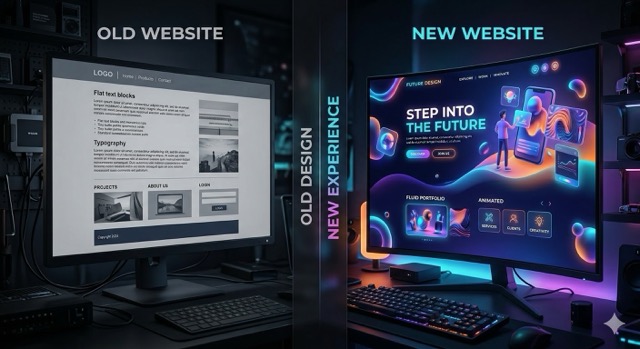
That's the difference between a website that looks like your business and a website that works like your business.
Actualyse builds B2B websites that work for the full buying committee — not just the first visitor. Speak 1:1 with an advisor to build your new website.